
RunMags journal
Multi Tool Versus Unified Workflow
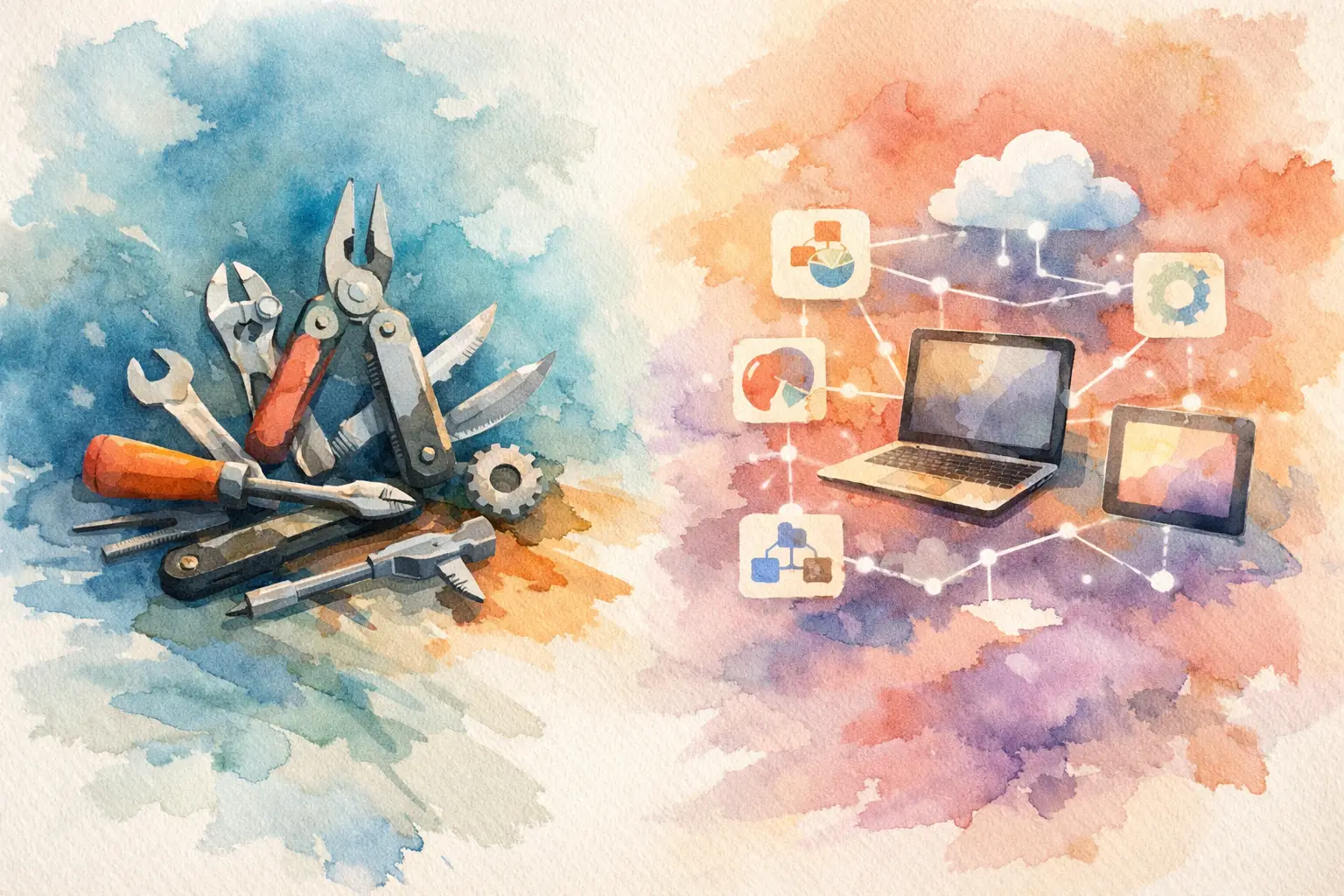
A proposal goes out from one app. The signed contract comes back through another. Production dates live in a spreadsheet. Billing sits in accounting software. Subscriber records are somewhere else entirely. That is the real-world version of the multi tool versus unified workflow debate for publishers - not a software philosophy question, but a daily operations problem that shows up as missed deadlines, slow approvals, and cash that takes too long to collect.
For magazine teams, especially lean ones, the appeal of separate tools is obvious. You can patch together a CRM, an eSignature app, a project board, invoicing software, an email platform, and a circulation database without making one big platform decision upfront. At first, that feels flexible. It can even feel cheaper.
But publishing is not a generic business process. Ad inventory affects proposals. Signed contracts affect fulfillment. Fulfillment affects production schedules. Production schedules affect billing timing. Subscriber records affect renewals, issue counts, and delivery. When every step depends on the one before it, disconnected tools create work between the work.
Multi tool versus unified workflow in publishing
The cleanest way to think about multi tool versus unified workflow is this: are your systems built around isolated tasks, or around the full publishing lifecycle?
A multi-tool setup usually does a decent job at individual functions. One app may be strong at CRM. Another may handle invoices well. A separate tool may organize tasks cleanly. The problem is handoff. Every handoff creates risk. Someone has to copy data, check status, send reminders, update a sheet, or reconcile what changed in one system versus another.
A unified workflow takes the opposite approach. Instead of optimizing one task at a time, it organizes the process from pitch to payment. Sales, contracts, production, fulfillment, subscriptions, and billing are connected because that is how publishing actually runs.
That distinction matters more in media than in many other industries. A generic sales stack can track deals, but it usually does not understand ad inventory, issue dates, flatplans, insertion orders, make-goods, or recurring subscriber terms. A generic accounting system can send invoices, but it does not know whether an ad actually ran or whether a renewal campaign should trigger before a print cutoff.
Why publishers outgrow app stacking fast
Most small publishers do not choose fragmentation because they love complexity. They choose it because they need to move. Launch the title. Start selling ads. Keep the issue on schedule. Use whatever works right now.
That is reasonable in the beginning. The trouble starts once volume increases. Maybe your team adds another publication. Maybe ad packages span print, digital, newsletter, and sponsored content. Maybe one salesperson promises inventory that production has not reserved yet. Maybe billing does not know a campaign was fulfilled, so invoices go out late. The stack that looked nimble at ten active deals becomes fragile at fifty.
This is where hidden costs show up.
The first hidden cost is labor. Not strategic labor - cleanup labor. Updating duplicate records, checking whether contracts were returned, hunting for the latest deadline, and chasing invoice details from another department. None of that grows revenue.
The second hidden cost is delay. Publishers lose speed when approvals sit in inboxes, when proposal details need to be re-entered into a contract, and when billing waits for manual confirmation from production. Deals close slower. Campaigns launch slower. Payments arrive slower.
The third hidden cost is credibility. Advertisers notice when paperwork is messy or fulfillment is unclear. Subscribers notice when renewals or service issues require back-and-forth. Internal confusion eventually becomes external friction.
Where a multi-tool setup still makes sense
A unified workflow is not automatically the right answer for every business at every stage. There are cases where a multi-tool setup still works.
If you are a very early-stage publisher with one title, minimal advertising complexity, no formal production process, and a tiny subscriber base, separate tools may be enough for a while. The same is true if your operation is heavily specialized and one mission-critical function truly requires a best-in-class standalone product.
There is also a practical argument for keeping certain external systems in place. Many publishers do not want to replace accounting entirely, and they should not have to. Payment processing and accounting connectivity can stay in familiar platforms as long as the workflow around them is connected.
That is the real trade-off. The choice is not between one platform that does everything and a pile of apps that do nothing well. The better question is whether your core publishing workflow is unified, even if some financial or marketing functions still connect outward.
What a unified workflow changes day to day
When publishers move from app juggling to one connected operational system, the biggest improvement is not cosmetic. It is control.
Sales can build proposals faster because inventory, rates, and product details already live in the same workflow. Contracts can move to signature without rebuilding the deal from scratch. Once signed, that order does not disappear into email. It becomes actionable for production and fulfillment.
Production teams gain visibility because booked ads, deadlines, and issue plans are connected. Instead of checking multiple systems to see what is sold, what is approved, and what is still missing, they can work from a current operating picture. That reduces preventable surprises late in the cycle.
Billing gets cleaner too. If fulfillment status and contract terms are linked, invoicing does not depend on somebody remembering to send a note or export a spreadsheet. Revenue moves faster because the system reflects what actually happened.
Circulation and subscriptions benefit in the same way. Subscriber data, renewals, issue service, and billing are part of one operating model rather than one more disconnected toolset the team has to monitor separately.
For multi-title publishers, the gains compound. You can standardize process across brands without flattening the differences between them. That matters when leadership wants consistency, but individual titles still need their own schedules, products, and sales activity.
The strongest argument against unified platforms
There is one fair criticism of unified systems: if they are too generic, they become another compromise. Publishers know this pain well. A general-purpose CRM can force awkward workarounds. A generic project platform can track tasks without understanding issue production. An accounting package can bill, but it cannot manage ad inventory or circulation logic.
So the question is not simply whether workflow should be unified. The question is whether it is unified around publishing.
That is where many software evaluations go wrong. Teams compare feature lists instead of operational fit. They ask whether a system can technically store data, not whether it reflects how magazine revenue and production actually move. A platform built for publishers should understand proposals, contracts, inventory, flatplanning, fulfillment, subscriptions, renewals, billing, and the handoffs between them. If it does not, your team will be stuck recreating the same bridges manually.
How to decide which model fits your team
Start with the friction, not the tools. Where do deals stall? Where do deadlines get missed? Where does your team re-enter the same information? Where do advertisers or subscribers experience lag? Those are workflow failures, not just software complaints.
Then look at dependency. If one action regularly triggers another - sold inventory to contract, contract to production, fulfillment to invoice, renewal to payment - those steps belong in one connected system. If a tool sits outside that chain and performs a truly separate function, integration may be enough.
Finally, measure the cost of manual coordination honestly. Many publishers underestimate how much time goes into status checks, duplicate entry, internal follow-up, and fixing preventable errors. The right platform decision often becomes obvious once that work is visible.
For publisher-first teams, this is why platforms like RunMags are gaining traction. The value is not that everything gets forced into one box. The value is that the core magazine business runs in one workflow built around how publishers sell, schedule, fulfill, renew, and bill.
The best setup is the one that removes busywork without breaking the way your business actually operates. If your team spends more time connecting systems than moving revenue and production forward, the debate is probably already settled. Stop asking whether more tools will fix the problem. Ask whether your workflow finally matches your business.