
Reporting for your publishing business
Leverage powerful dashboards and reports to inform your decision making and to optimize your publishing business. Analyze revenue streams, marketing campaigns, sales rep performance and other company financials.
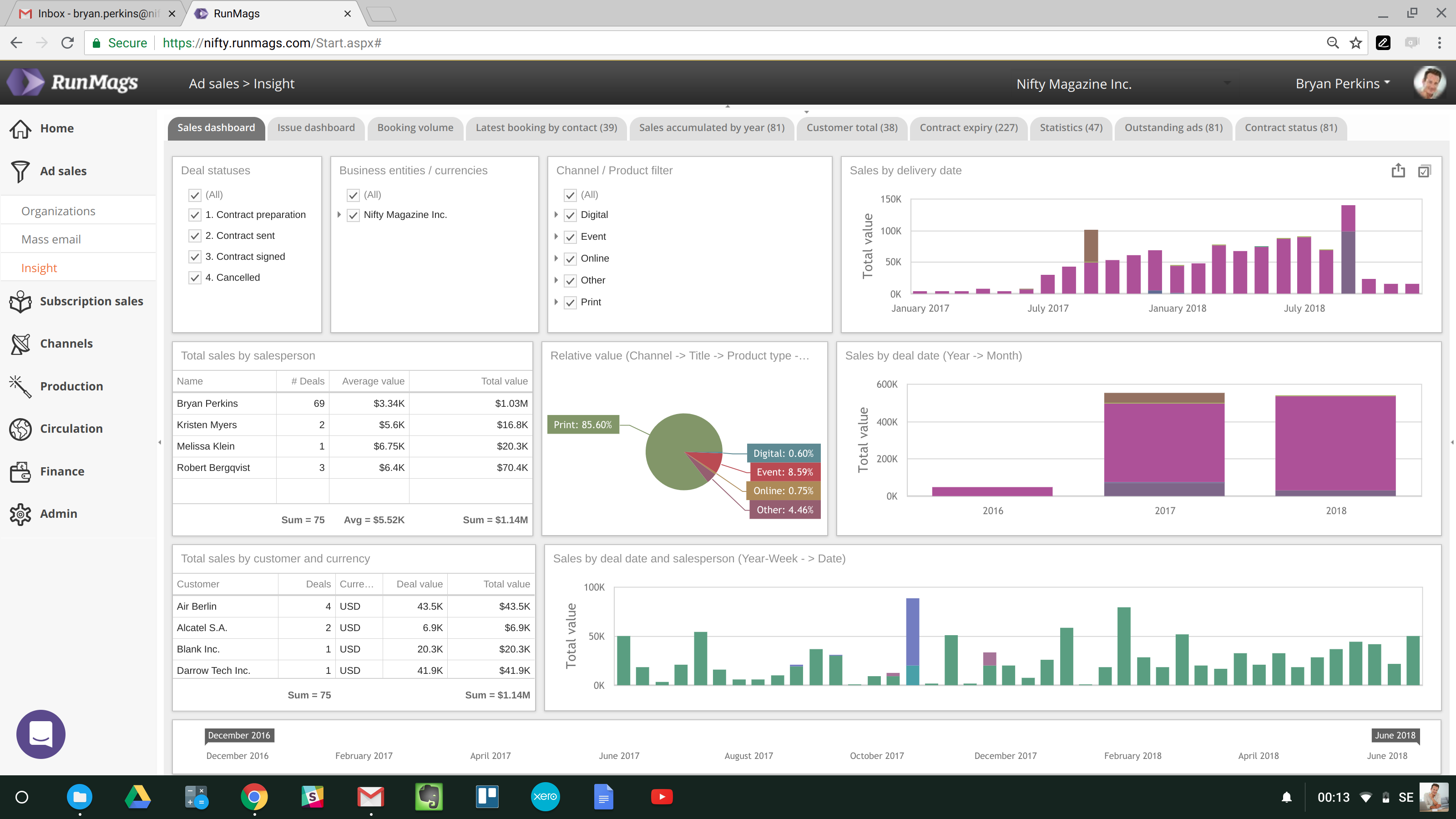
Define the publishing questions you want reporting to answer
Useful reporting starts with a decision. A sales manager may need to understand progress toward an upcoming issue. Production may need to identify missing artwork or unresolved placements. Finance may need to review revenue and payment work. Agree what a figure means, which records support it and what action your team will take when it changes.
RunMags connects publishing operations with reporting for the business. During your evaluation, ask to see the information relevant to your own magazines and staff. A total without a shared definition can create confusion: a proposal, a signed advertising commitment, a delivered placement and a collected payment represent different stages of work. Do not treat them as interchangeable measures of success.
Check the records before trusting the summary
Use a small set of representative examples to trace a report back to its source information. Confirm that the magazine, issue, customer and status make sense, and identify who is responsible for keeping the underlying records current. If a number looks unexpected, investigate the operational context before assuming that the summary is wrong or that the business has changed.
Make reporting part of the team's routine rather than a separate spreadsheet exercise. Decide which questions are reviewed weekly, which are tied to issue deadlines and which need finance input. Discuss your requirements with our team, including any integrations that affect the available information. Explore sales workflows, issue planning and billing to connect the discussion.
Bring a real question to the walkthrough, such as which advertiser commitments remain unresolved before an issue deadline. Agree the definition first, then examine the records supporting the answer. This keeps reporting tied to an operational decision and gives your team a useful way to assess whether the available information meets its needs.