
Connect publisher events with sales
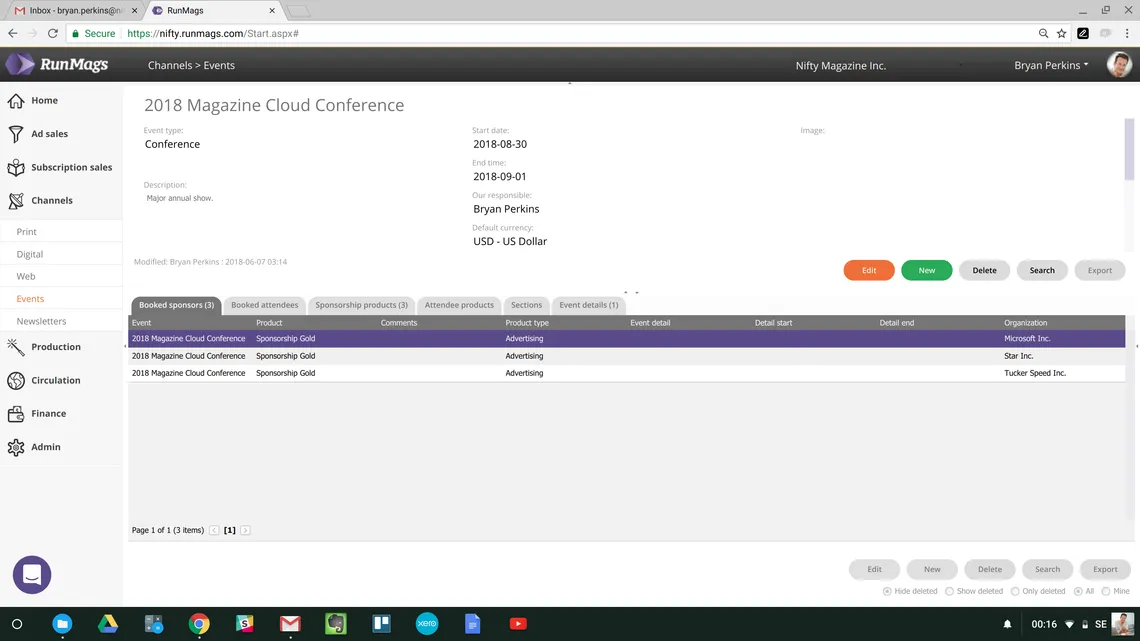
Plan publisher events alongside your commercial relationships
Magazine publishers may organize conferences, awards, reader gatherings or advertiser events alongside their publications. Each event introduces another set of relationships and commitments for the team to coordinate. Before choosing software for that work, describe what the event involves and how it connects with your existing advertising and publishing business. The useful question is which information should stay connected, rather than whether an event can be represented by a single feature name.
Map the work before deciding what to connect
Start with the people involved: advertisers, sponsors, attendees, staff and external suppliers may have different responsibilities. Identify which relationships already exist in your publishing records and which need a separate process. Write down the commercial commitments your team must understand, the deadlines it needs to review and the finance handover it expects. This prevents an event discussion from becoming a disconnected list of software requests.
For example, an advertiser may discuss magazine placements and an event sponsorship during the same sales conversation. Your team needs to understand the agreed scope, the contacts involved and the work that remains to be delivered. Production and finance should not have to infer those details from a brief sales note. Use this scenario to discuss how RunMags customer relationships and advertising workflows could fit your requirements.
Check event-specific requirements explicitly
RunMags connects publishing advertising sales, contracts, subscriptions, production and billing. If your event also requires ticketing, registration, badge printing, seating plans or a specialized event website, bring those requirements to the team. Do not assume that every event service is included merely because an event relates to your publishing business. Confirm the current product scope, relevant integrations and any separate tools before changing your process. If you are also comparing an audience and event data platform for B2B publishers, read RunMags compared with Omeda.
A useful evaluation includes an ordinary event commitment and an exception. Discuss what happens if a sponsor changes its agreement, a deadline moves or finance needs clarification before billing. Identify who owns each decision and where staff should find the current information. These examples give the team a concrete basis for explaining supported workflows and the setup that would be needed.
Keep your first evaluation manageable
Choose one upcoming event and a small set of representative relationships. Explain the event's connection with your magazines, then agree which part of the workflow you want to evaluate. Keep historical data and additional requirements on a separate list so they do not obscure the first business decision. You can expand the discussion once the initial handover is understood.
Review advertising sales, contracts and fulfillment and billing for the publishing processes that may connect with your event. Book a demo to discuss your event requirements, or ask Maggie to help you prepare a clear list of questions for the team.
Bring event deadlines and sponsor requirements to the discussion so the team can assess the practical handover you need.